

How Digital Signage Displays Are Transforming the Modern Retail Experience

The retail industry is constantly evolving, and businesses are looking for innovative ways to attract customers, improve shopping experiences, and increase sales. Traditional marketing methods are no longer enough to capture the attention of modern consumers, who expect engaging, interactive, and personalized shopping experiences. This is where Digital Signage Displays play an important role.
From displaying promotional offers to showcasing new product collections, digital displays have become an essential part of modern retail environments. Retailers are increasingly adopting Digital Displays for Retail to communicate effectively with customers, strengthen brand visibility, and create memorable in-store experiences.
In this blog, we will explore how digital signage technology is transforming retail businesses and why it is becoming an important investment for retailers.
1. What Are Digital Signage Displays?
Digital Signage Displays are electronic screens used to present multimedia content, including images, videos, advertisements, announcements, product information, and promotional messages. These displays can be installed in shopping malls, supermarkets, retail stores, restaurants, showrooms, and other commercial spaces.
Unlike traditional printed posters and banners, digital signage allows businesses to update their content quickly without the need for printing or physical replacements.
Retailers can use these displays to highlight special discounts, introduce new products, promote seasonal collections, and share important brand messages. This flexibility makes digital signage an effective communication solution for businesses of different sizes.
2. Why Are Digital Displays for Retail Important?
Customer expectations have changed significantly over the years. Shoppers are attracted to visually appealing stores that provide useful information and convenient shopping experiences.
Digital Displays for Retail help businesses meet these expectations by delivering dynamic and engaging content. Bright visuals, attractive animations, and informative videos can capture customer attention more effectively than static promotional materials.
These displays also help retailers maintain consistent communication throughout their stores. Whether placed near the entrance, product shelves, checkout counters, or window displays, digital screens can deliver relevant messages at important customer touchpoints.
3. Benefits of Digital Signage Displays for Retail Businesses
There are several advantages of implementing digital signage solutions in retail environments.
Enhanced Customer Engagement
Digital screens make shopping environments more interactive and visually attractive. Retailers can use videos, animations, and creative advertisements to capture shoppers’ attention and encourage them to explore different products.
Easy Content Management
One of the biggest advantages of digital signage is the ability to update content remotely. Retailers can change promotional campaigns, product prices, and announcements without replacing printed materials. This saves time and makes marketing campaigns more flexible.
Improved Brand Awareness
Consistent branding is essential for building customer trust. Digital displays allow retailers to showcase brand stories, product demonstrations, and promotional campaigns using high-quality visuals.
Increased Promotional Opportunities
Retailers can highlight limited-time offers, discounts, new arrivals, and exclusive deals. Strategically placed digital screens can encourage customers to consider additional purchases while shopping.
Reduced Printing Costs
Traditional advertising requires regular printing and replacement of posters and banners. Digital signage reduces the need for printed promotional materials, making campaign updates more convenient and potentially more cost-effective over time.
4. Different Applications of Digital Displays for Retail
Digital signage technology can be used in multiple areas of a retail store to improve communication and customer experiences.
- Storefront Displays: Attract passersby with promotional videos, product highlights, and special offers.
- In-Store Advertising: Promote new arrivals, seasonal collections, and exclusive discounts.
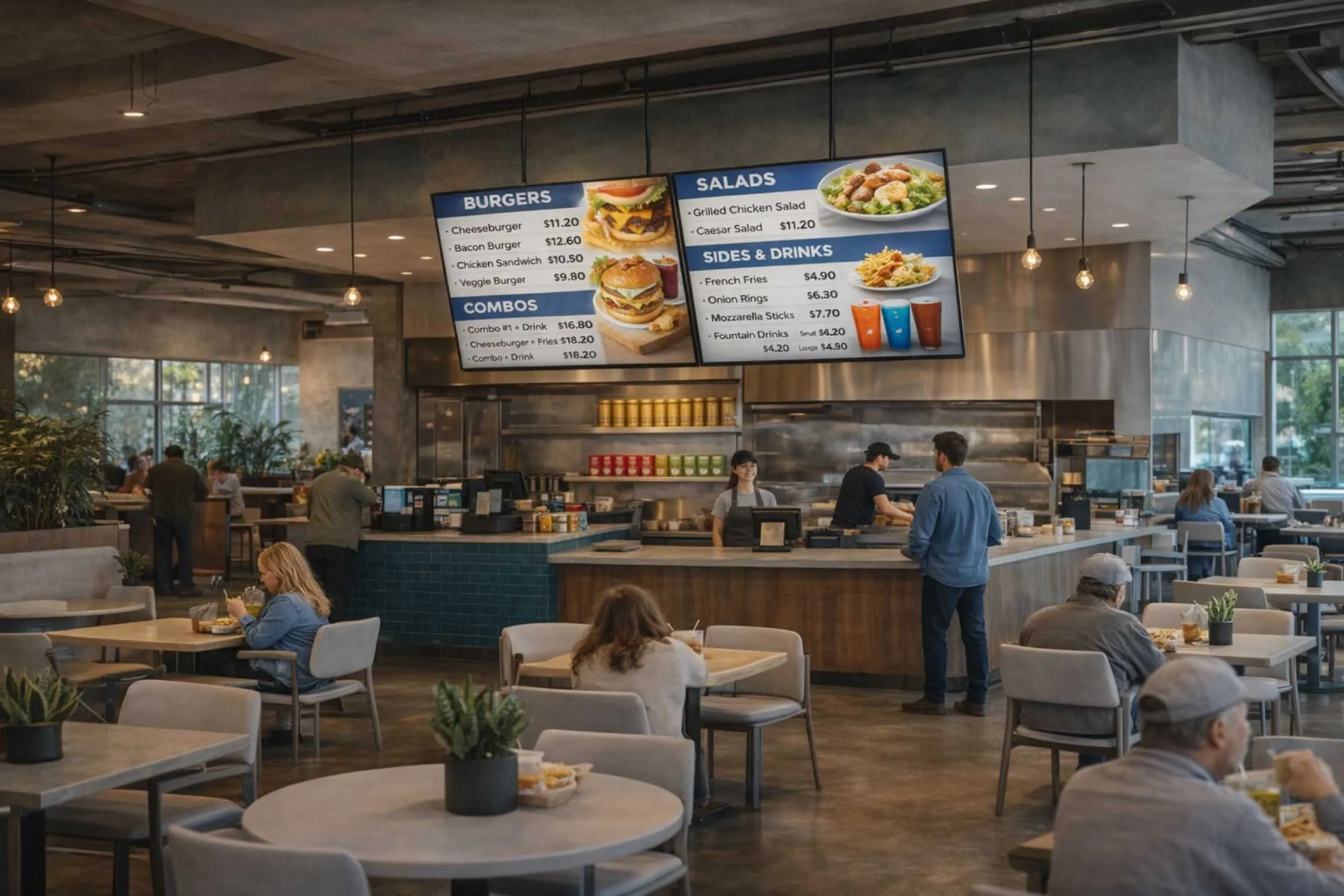
- Digital Menu Boards: Display product options, pricing, and promotional combinations in food and beverage retail outlets.
- Interactive Displays: Allow customers to explore product details, specifications, and available options.
- Checkout Displays: Share promotional messages and encourage impulse purchases while customers wait in line.
- Wayfinding Displays: Help shoppers navigate large retail stores and shopping centres.
By selecting the right display solutions and placement strategies, retailers can create a more organized and engaging shopping environment.
5. How Digital Signage Improves the Customer Shopping Experience
A positive customer experience is one of the most important factors influencing retail success. Digital signage helps retailers provide shoppers with relevant information at the right time.
For example, a fashion retailer can use digital screens to showcase different outfit combinations, styling suggestions, and new seasonal collections. Similarly, an electronics store can display product demonstrations, technical specifications, and comparison videos.
Digital Displays for Retail can also support interactive experiences, allowing customers to access product information independently. This makes shopping more convenient and helps customers make informed purchasing decisions.
Additionally, attractive digital content can create a modern store atmosphere that encourages customers to spend more time exploring products and services.
6. Key Factors to Consider When Choosing Digital Signage Displays
Before investing in digital signage technology, retailers should evaluate a few important factors.
Screen Size and Resolution: Choose a display size and resolution suitable for the viewing distance and installation location.
Display Brightness: For storefronts and brightly lit retail environments, screens should provide sufficient brightness for clear visibility.
Content Management Software: Select a solution that makes it easy to schedule, manage, and update content across multiple screens.
Durability and Performance: Retail displays should be designed to handle the operating conditions and usage requirements of the business.
Installation and Placement: Position screens strategically to maximize visibility without obstructing customer movement.
Considering these factors helps businesses select digital signage solutions that align with their marketing goals and operational requirements.
7. The Future of Digital Signage in Retail
The future of retail signage is becoming increasingly connected, intelligent, and interactive. Technologies such as artificial intelligence, data analytics, touchscreen interfaces, and personalized content management are creating new opportunities for retailers.
Businesses can use these technologies to deliver more relevant promotions, understand customer engagement, and improve their marketing strategies.
Digital Signage Displays are also expected to play a significant role in creating seamless shopping experiences by connecting physical stores with digital retail platforms.
As competition increases, retailers that embrace modern display technologies can create more engaging environments and communicate their brand messages more effectively.
Conclusion
Digital signage is no longer just a modern advertising tool; it has become an important part of the retail communication strategy. From improving customer engagement and promoting products to simplifying content management, these solutions offer several advantages for businesses.
Investing in the right Digital Displays for Retail can help retailers create visually appealing stores, deliver timely information, and strengthen customer relationships.
As retail technology continues to advance, businesses that adopt innovative digital signage solutions will be better positioned to meet changing customer expectations and build memorable shopping experiences.

- Share

YOU MIGHT ALSO ENJOY

1950s Fads and Slang in the 50’s: A Nostalgic Look at the Trends That Defined an Era
Stephen Romero - November 5, 2026

Experience Luxury on the Water: Fishing Yacht Rental Dubai & Yacht Party Packages Dubai
Stephen Romero - November 5, 2026

Découvrez les meilleures opportunités immobilières dans les Laurentides : propriétés à vendre à Saint-Sauveur et condos au bord de l’eau
Stephen Romero - November 5, 2026
search
FAST ACCESS
- art&gallery (11)
- Automotive (29)
- beauty (17)
- blog (1,066)
- Business (1,615)
- car (1)
- cleening (27)
- clinic (1)
- Commercial Cleaning (1)
- courier services (7)
- Cybersecurity (1)
- dentel care (24)
- Driving school (15)
- electronics (1)
- events (3)
- food (4)
- forests (11)
- gameing (11)
- Health (125)
- Health & Fitness (229)
- Home & Garden (16)
- Home Improvement (3)
- Landscaping (1)
- Law (17)
- Lifestyle (18)
- machinery (5)
- Pest Control (1)
- Real Estate (20)
- Share Market (15)
- Shopping (22)
- Software Development (2)
- Technology (52)
- tool (3)
- toys (2)
- Trade Show Marketing (1)
- Travel (64)
- Wedding & Events (379)

must read
1950s Fads and Slang in the 50’s: A Nostalgic Look at the Trends That Defined an Era
Stephen Romero - November 5, 2026
Experience Luxury on the Water: Fishing Yacht Rental Dubai & Yacht Party Packages Dubai
Stephen Romero - November 5, 2026
Découvrez les meilleures opportunités immobilières dans les Laurentides : propriétés à vendre à Saint-Sauveur et condos au bord de l’eau
Stephen Romero - November 5, 2026
Reliable Security Solutions with Maitland Locksmith and Mobile Locksmith for Cars
Stephen Romero - November 5, 2026
How Digital Signage Displays Are Transforming the Modern Retail Experience
Stephen Romero - November 5, 2026
recent post

ADVERTISEMENT

ARCHIVES
- November 2026 (105)
- October 2026 (170)
- September 2026 (55)
- August 2026 (110)
- July 2026 (202)
- June 2026 (319)
- May 2026 (244)
- April 2026 (197)
- March 2026 (174)
- February 2026 (179)
- January 2026 (210)
- December 2025 (151)
- November 2025 (132)
- October 2025 (105)
- September 2025 (166)
- August 2025 (164)
- July 2025 (150)
- June 2025 (172)
- May 2025 (97)
- April 2025 (1)
- March 2025 (8)
- February 2025 (9)
- January 2025 (8)
- December 2024 (25)
- November 2024 (40)
- October 2024 (11)
- September 2024 (1)
- July 2024 (10)
- June 2024 (11)
- May 2024 (31)
- April 2024 (15)
- March 2024 (19)
- February 2024 (6)
- January 2024 (7)
- December 2023 (11)
- November 2023 (1)
- October 2023 (2)
- July 2023 (13)
- June 2023 (21)
- May 2023 (27)
- April 2023 (23)
- March 2023 (16)
- February 2023 (31)
- January 2023 (27)
- December 2022 (11)
- November 2022 (12)
- October 2022 (11)
- September 2022 (11)
- August 2022 (14)
- July 2022 (13)
- June 2022 (19)
- May 2022 (17)
- April 2022 (10)
- March 2022 (12)
- February 2022 (8)
- January 2022 (9)
- December 2021 (19)
- November 2021 (4)
- October 2021 (6)
- September 2021 (4)
- August 2021 (4)
- July 2021 (10)
- June 2021 (6)
- May 2021 (2)
- April 2021 (2)
- March 2021 (45)
- August 2020 (31)
- July 2020 (30)
- June 2020 (29)