

Advanced CFD Analysis and Engineering Simulation Services for Modern UAE Infrastructure

The United Arab Emirates is witnessing continuous expansion in digital infrastructure, industrial facilities, commercial developments, and transportation networks. These developments require advanced engineering solutions that deliver operational reliability, energy efficiency, and high safety standards. Computational Fluid Dynamics (CFD) has become an important technology for evaluating complex engineering conditions and improving the performance of modern infrastructure.
CFD simulations allow engineers to investigate airflow, heat transfer, temperature distribution, ventilation performance, and smoke movement before implementing physical designs. These capabilities help identify potential engineering problems, reduce design uncertainties, and support better project decisions. Professional simulation services are particularly valuable in the UAE, where challenging climatic conditions and demanding infrastructure requirements create unique engineering considerations.
Advanced Infrastructure Planning for Data Centre UAE
Data centres require continuous cooling and effective airflow management to maintain the performance of critical IT equipment. High ambient temperatures in the UAE make cooling system efficiency an important consideration during infrastructure planning.
Professional Data Centre UAE engineering assessments help developers understand airflow distribution, equipment temperature variations, and cooling system performance. Engineers examine server rack configurations, cooling unit locations, ventilation pathways, and possible thermal hotspots.
These assessments provide valuable information for improving cooling layouts and maintaining suitable operating conditions. Early identification of airflow problems can also reduce the need for expensive modifications after installation.
Accurate Engineering Simulations Using Ansys Fluent CFD
Modern engineering projects require reliable computational tools to understand complex fluid behaviour. Ansys Fluent CFD provides advanced capabilities for simulating fluid flow, turbulence, thermal transfer, pressure distribution, and ventilation conditions.
Engineers use these simulations to evaluate different operating scenarios and understand how proposed designs perform under realistic environmental conditions. The results help identify inefficient configurations, assess engineering alternatives, and improve overall system performance.
From industrial cooling installations to large commercial developments, computational modelling supports technically informed design decisions.
Optimising Cooling Infrastructure with Chiller yard CFD
Chiller yards are critical to the performance of large HVAC installations and data centre cooling systems. Inadequate equipment spacing or poor airflow arrangements can cause hot air recirculation, reducing cooling efficiency.
A professional Chiller yard CFD study investigates airflow patterns around chillers, exhaust discharge, equipment positioning, and surrounding environmental influences.
The analysis helps identify areas where discharged hot air may enter equipment air intakes. Engineers can use the findings to recommend improved layouts, reduce airflow interference, and support reliable cooling operations.
Enhancing Heat Rejection Through Cooling Tower Analysis
Cooling towers are essential for rejecting unwanted heat from industrial processes and commercial cooling systems. Their performance depends on airflow availability, discharge conditions, surrounding structures, and environmental factors.
A detailed Cooling Tower Analysis evaluates airflow distribution, exhaust recirculation, temperature variations, and potential interference between adjacent cooling towers.
CFD modelling provides engineers with a better understanding of how different installation arrangements influence thermal performance. This information supports equipment layout optimisation and more effective cooling system planning.
Improving Indoor Environments with Thermal Comfort CFD Analysis
Indoor thermal conditions directly influence occupant comfort and building performance. Poor ventilation, uneven air distribution, and inappropriate HVAC diffuser positioning can create uncomfortable spaces.
Thermal Comfort CFD Analysis examines indoor air velocity, temperature distribution, ventilation effectiveness, and localised thermal conditions.
By evaluating different HVAC configurations, engineers can identify areas requiring improved airflow and optimise mechanical system arrangements. These studies are useful for offices, healthcare facilities, hotels, educational institutions, and commercial buildings.
Reliable Cooling Performance Through Data Centre CFD
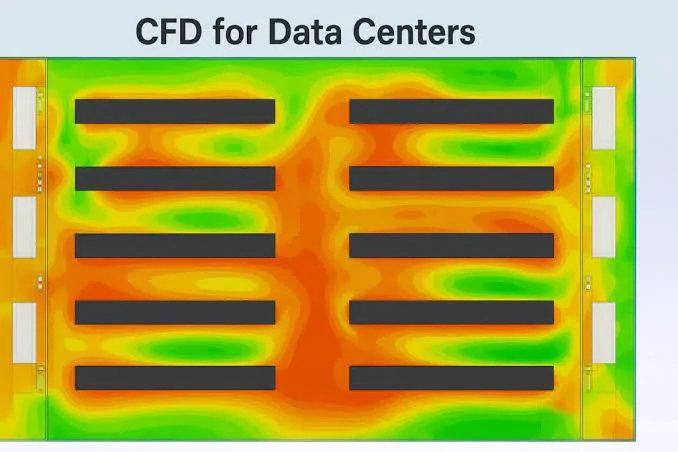
Maintaining stable temperatures is essential for protecting servers and other sensitive equipment. Data Centre CFD simulations provide detailed information about airflow behaviour across server racks, cooling corridors, raised floors, and air-conditioning equipment.
The assessment identifies potential overheating zones, recirculation patterns, bypass airflow, and uneven cooling distribution. Engineers can use these results to improve cooling configurations and enhance thermal management.
For facilities operating in the UAE, effective cooling strategies are particularly important because of high ambient temperatures and continuous equipment operation.
Supporting Fire Safety Through Tunnel Fire Modelling
Tunnel environments require specialised fire safety assessments because smoke and heat can spread rapidly through enclosed spaces. Tunnel Fire Modelling helps engineers evaluate fire development, smoke propagation, temperature distribution, and mechanical ventilation performance.
Different fire scenarios can be simulated to understand smoke behaviour and assess ventilation strategies. The findings support fire safety planning, emergency response preparation, and the evaluation of tunnel safety systems.
Understanding Pedestrian Movement Through Crowd Modelling
Large public facilities must accommodate pedestrian movement safely and efficiently. Airports, shopping centres, exhibition venues, and stadiums can experience high occupancy levels during peak periods.
Crowd Modelling helps engineers examine pedestrian movement, congestion, occupant distribution, and movement patterns under different conditions.
The results can identify potential bottlenecks and support better circulation planning, entrance arrangements, and pedestrian management strategies.
Improving Emergency Evacuation with Egress Modelling
Effective emergency evacuation planning is essential for protecting building occupants. Egress Modelling evaluates occupant movement, evacuation routes, exit accessibility, and potential congestion during emergency scenarios.
Simulation results help engineers understand evacuation performance and identify areas where building layouts or exit arrangements may require improvement.
Professional Fire Safety Assessment Through Smoke Modelling
Smoke management is an important part of fire safety engineering. Smoke Modelling evaluates smoke propagation, visibility conditions, temperature distribution, and ventilation effectiveness during potential fire incidents.
These simulations help assess smoke extraction systems and identify areas where smoke accumulation could affect evacuation conditions. The findings support improved smoke control strategies and informed fire engineering decisions.
Specialist Thermal comfort analysis CFD UAE Solutions
The UAE’s hot climate creates specific challenges for indoor environmental management. Thermal comfort analysis CFD UAE services help engineers assess air movement, temperature variations, ventilation performance, and indoor comfort conditions.
These assessments provide useful information for improving HVAC configurations, reducing inefficient airflow, and supporting energy-conscious building designs.
Conclusion
Advanced CFD simulation provides valuable engineering insights for cooling optimisation, infrastructure planning, fire safety, and indoor environmental performance. Accurate modelling enables project stakeholders to evaluate complex scenarios and make informed technical decisions before construction or system implementation.
lavaconsultants supports modern engineering projects through professional simulation methodologies and technical analysis. With a focus on reliable engineering assessments, lavaconsultants helps stakeholders improve infrastructure performance, strengthen safety strategies, and support sustainable development across the UAE.

- Share

YOU MIGHT ALSO ENJOY
Choose the Right Legal Education Pathway for a Bright Future in Maharashtra
Stephen Romero - November 17, 2026

Engineering Education in Pune: Choosing the Right College for Career Success
Stephen Romero - November 17, 2026

How Artificial Intelligence Is Redefining Professional Video Creation and Digital Media
Stephen Romero - November 17, 2026
search
FAST ACCESS
- art&gallery (11)
- Automotive (29)
- beauty (18)
- blog (1,140)
- Business (1,686)
- car (1)
- cleening (27)
- clinic (1)
- Commercial Cleaning (1)
- courier services (7)
- Cybersecurity (1)
- dentel care (24)
- Driving school (15)
- electronics (1)
- events (3)
- food (4)
- forests (11)
- gameing (11)
- Health (132)
- Health & Fitness (230)
- Home & Garden (16)
- Home Improvement (3)
- Landscaping (1)
- Law (17)
- Lifestyle (18)
- machinery (5)
- Pest Control (1)
- Real Estate (20)
- Share Market (15)
- Shopping (22)
- Software Development (2)
- Technology (52)
- tool (3)
- toys (2)
- Trade Show Marketing (1)
- Travel (64)
- Wedding & Events (384)

must read
Choose the Right Legal Education Pathway for a Bright Future in Maharashtra
Stephen Romero - November 17, 2026
Engineering Education in Pune: Choosing the Right College for Career Success
Stephen Romero - November 17, 2026
Advanced CFD Analysis and Engineering Simulation Services for Modern UAE Infrastructure
Stephen Romero - November 17, 2026
How Artificial Intelligence Is Redefining Professional Video Creation and Digital Media
Stephen Romero - November 17, 2026
How Voice AI Technology Is Helping Businesses Automate Customer Communication and Accelerate Growth
Stephen Romero - November 17, 2026
recent post
ADVERTISEMENT

ARCHIVES
- November 2026 (264)
- October 2026 (170)
- September 2026 (55)
- August 2026 (110)
- July 2026 (202)
- June 2026 (319)
- May 2026 (244)
- April 2026 (197)
- March 2026 (174)
- February 2026 (179)
- January 2026 (210)
- December 2025 (151)
- November 2025 (132)
- October 2025 (105)
- September 2025 (166)
- August 2025 (164)
- July 2025 (150)
- June 2025 (172)
- May 2025 (97)
- April 2025 (1)
- March 2025 (8)
- February 2025 (9)
- January 2025 (8)
- December 2024 (25)
- November 2024 (40)
- October 2024 (11)
- September 2024 (1)
- July 2024 (10)
- June 2024 (11)
- May 2024 (31)
- April 2024 (15)
- March 2024 (19)
- February 2024 (6)
- January 2024 (7)
- December 2023 (11)
- November 2023 (1)
- October 2023 (2)
- July 2023 (13)
- June 2023 (21)
- May 2023 (27)
- April 2023 (23)
- March 2023 (16)
- February 2023 (31)
- January 2023 (27)
- December 2022 (11)
- November 2022 (12)
- October 2022 (11)
- September 2022 (11)
- August 2022 (14)
- July 2022 (13)
- June 2022 (19)
- May 2022 (17)
- April 2022 (10)
- March 2022 (12)
- February 2022 (8)
- January 2022 (9)
- December 2021 (19)
- November 2021 (4)
- October 2021 (6)
- September 2021 (4)
- August 2021 (4)
- July 2021 (10)
- June 2021 (6)
- May 2021 (2)
- April 2021 (2)
- March 2021 (45)
- August 2020 (31)
- July 2020 (30)
- June 2020 (29)